Stone Finds A Second Life – By Riya Pailwan
What happens to stone when its crushed and grounded to its finest form? It’s called by the name ‘stone dust’ or ‘quarry dust’. A byproduct that’s proven its use only limited to construction. One can only imagine it taking a form of an art. But in the right hands, even dust can dream again. For Amita Sachdeva, an artist from Noida, this transformation began with an accidental discovery in 1980. A simple experiment—mixing stone dust with resin, she painted the first layer on plywood.
What started as a curiosity evolved into an enduring artistic language, one that would shape her practice for decades to come. Amita never held back from learning or experimenting with new materials and mediums. Her hands and heart moved from oil paints, fabrics, stained glass, Venetian mirrors, and porcelain painting, spending more than 30 years evolving in and with art.
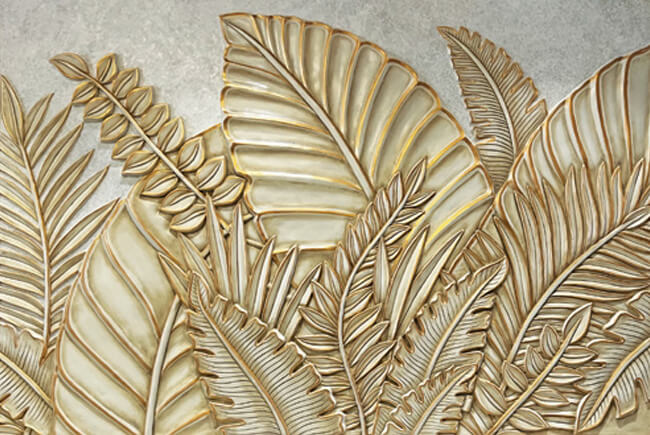
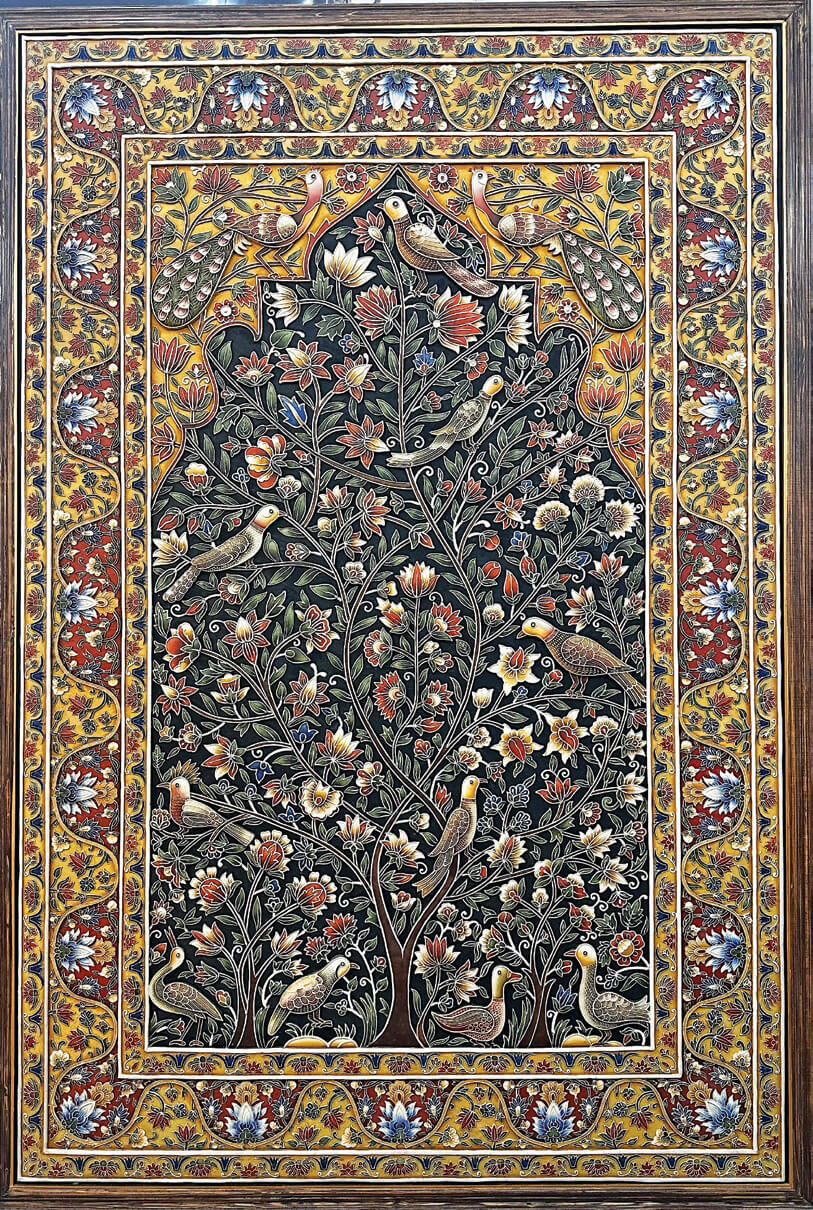
Much like the philosophy of ‘Best From Waste,’ Amita gathers this marble dust and mixes it with natural resin to create layers upon layers of this three-dimensional art that seems to breathe. She reframes the stone from its discarded state to a beautiful, detailed art piece. It takes days of dedication and patience to create one single work, waiting for each layer to dry naturally and adding depth to it.
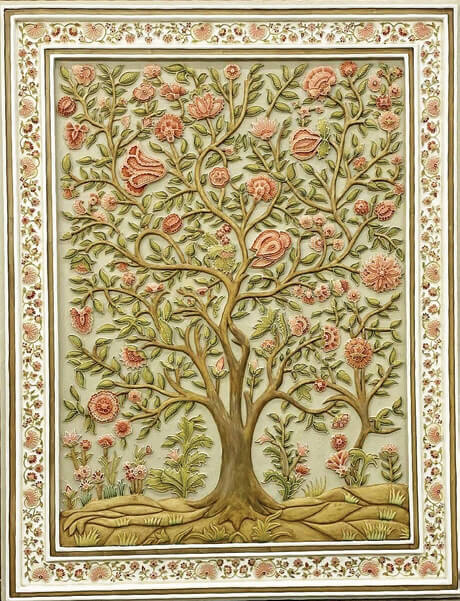
Having created more than 100 with a maximum of 9-10 layers, it is nothing less than worship for Amita. And what makes it even more mesmerising for her customers is how she deliberately abandons the regular painting technique and adds her own style, giving the painting a vintage look. Far from contemporary aesthetics, her work embraces natural motifs—birds, animals, and deities—rooted deeply in traditional Indian art.
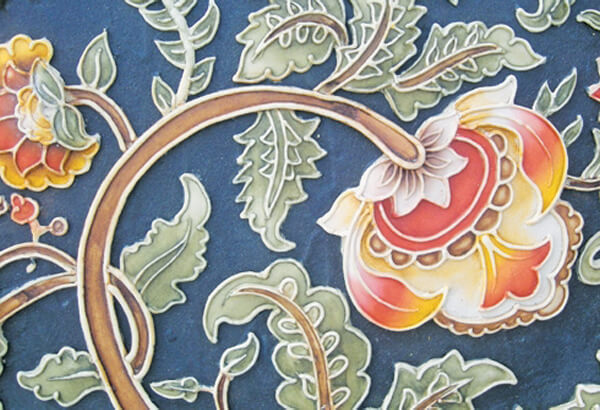
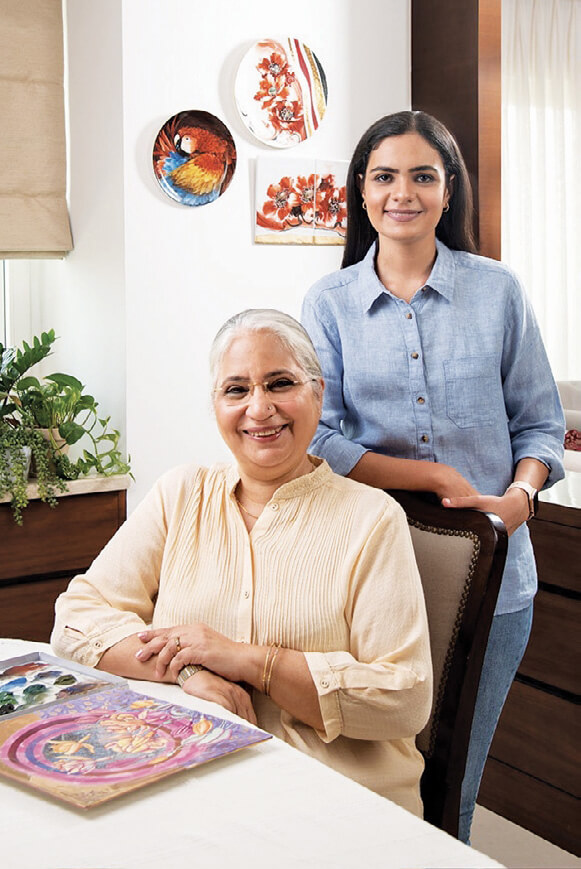
Today, Amita, with her daughter Vidushi, leads ‘Earth-n-Heaven’, a studio in Noida. A place where numerous art forms dwell and flourish. Over the years, she has trained countless artisans, passing down not just technique but wisdom, not just skills but spirit.
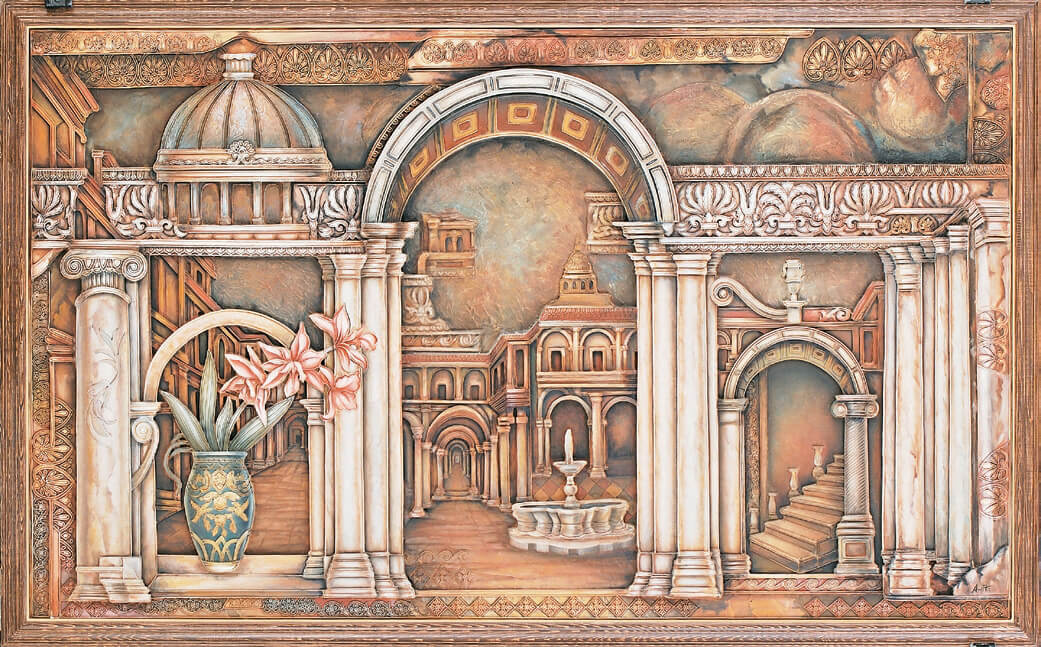
Amita’s stone dust art is neither monumental nor heroic. It doesn’t strive to dominate a space or demands to be seen. Instead, it settles in like evening light—quiet, serene, contemplative. It adds a depth and calm to the interiors it inhabits. In her hands, what the world discards becomes what the soul seeks: beauty born from stillness, art born from dust.