Architecture that Listens: Stopping by ‘Stonehedge’, Nubra Valley, Ladakh
In Focus:Inspiration Collective – By Nirmiti Sutar
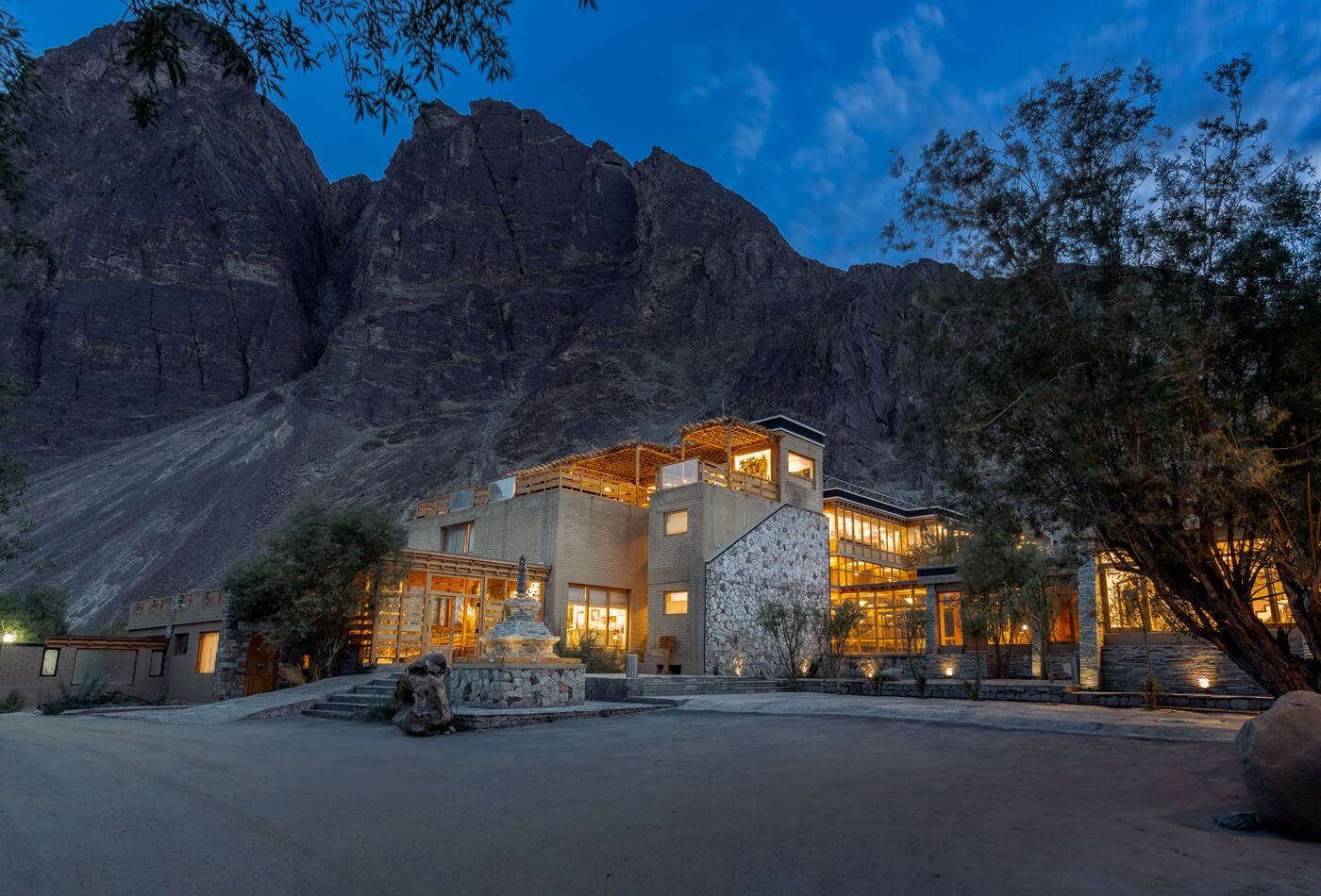
In Nubra Valley of Ladakh, where the Shyok River cuts through the Himalayas and the air gets thin at ten thousand feet, the architects of ‘Stonehedge’, Inspiration Collective, showed up ready to listen.
Architects, Jaigopal Rao, Latha Raman Jaigopal, Shweta Balasubramoni and Sandeep Bogadi arrived at the place where stone tells stories. Each pebble polished smooth by glacial meltwater, each boulder split and weathered by a thousand freeze-thaw cycles. What did it mean to build in such a place? Not to impose, surely. Not to declare sovereignty over silence.The answer that emerged wasitself a kind of poem: stone inside,stone outside.
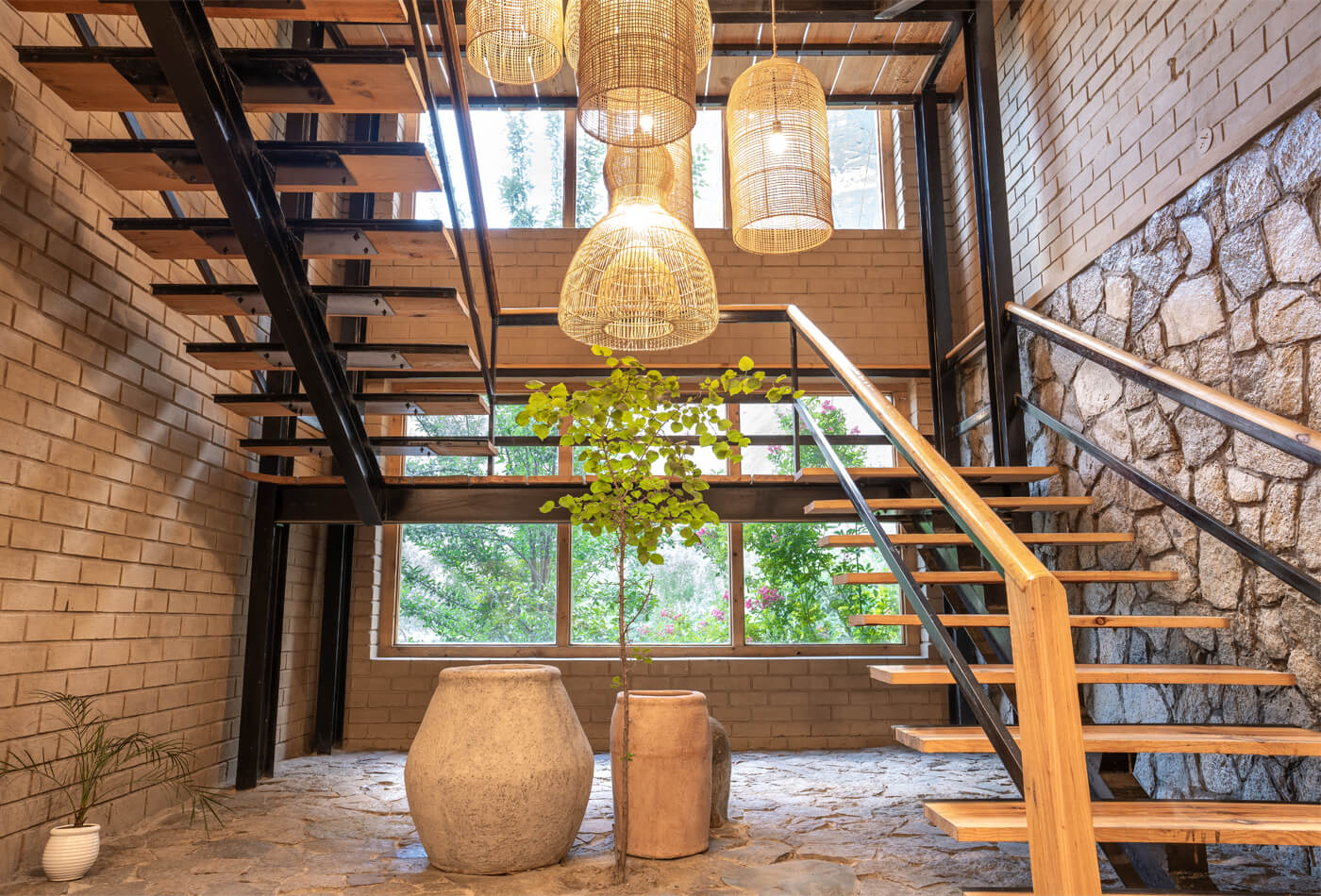
Walk through Stonehedge and you trace a continuous meditation. The walls that shelter you are composed of the same Himalayan stone that rises in cathedral spires beyond your window.
The team understood a fundamental truth: everything necessary must be here already. So they looked down. Into the soil that would become stabilized mud blocks, offering insulation against cold that can shatter unprotected ambition. They looked around. To the willow and poplar that Ladakhi builders have trusted for generations, their timber knowing how to breathe in thin air. They looked at their feet. Where colourful stones and pebbles lay scattered like a palette.
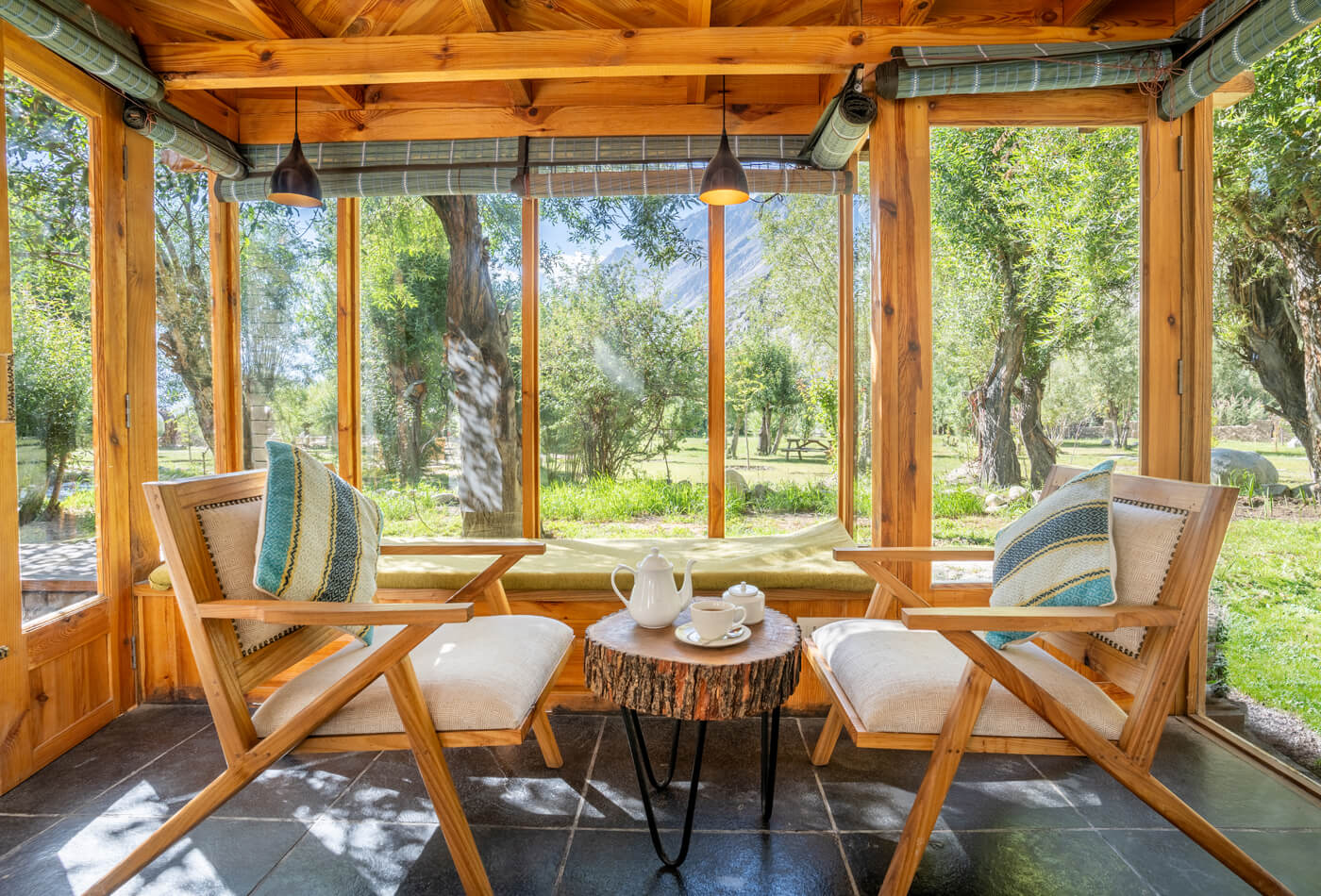
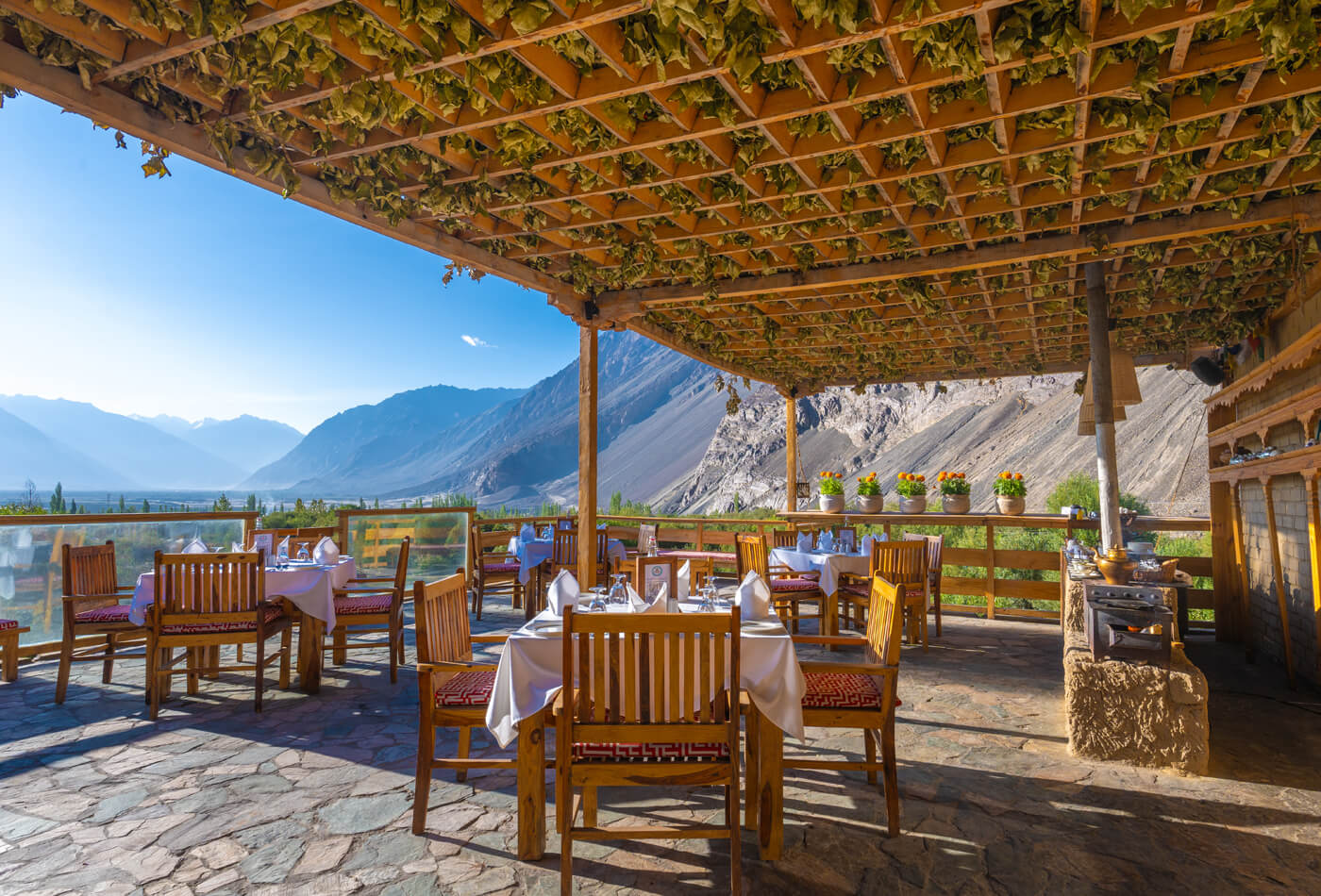
The restaurant and dinning spaces blur down the boundaries between you and the mountains. Stone walls, nature-based wastewater treatment systems, solar-powered energy sustainably works with the climate supporting the basic needs for the hotel.
The resort’s rooms are built using a hybrid system of stone and stabilized mud blocks. The walls store heat during the day and release it at night, a passive heating method that’s been used in Ladakh for centuries. The hotel not only sits in the grounds of Ladakh but also adapts to its craft detailing it with the touch of its region.
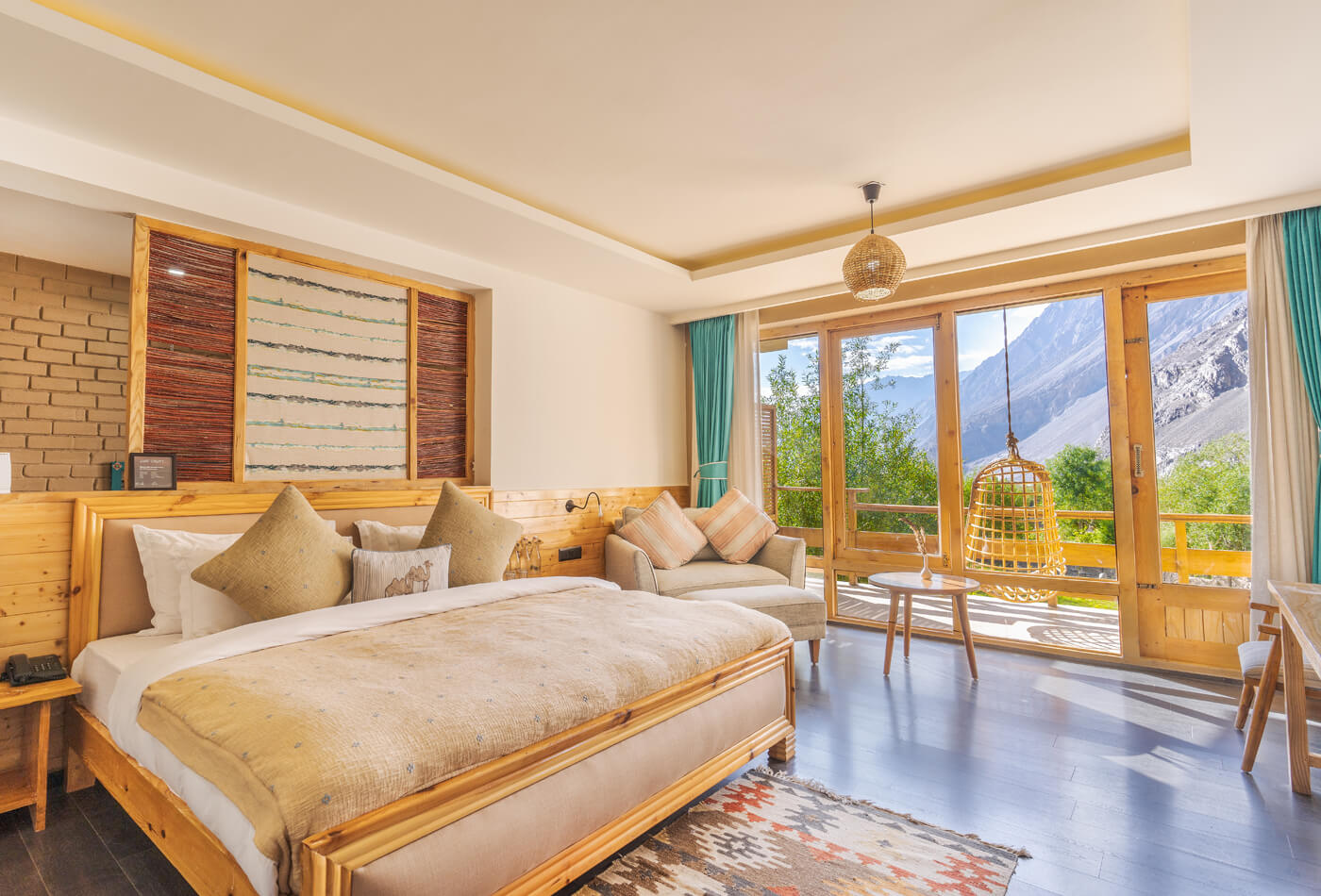
For guests who arrive seeking escape, what they find instead is implication. A building that implicates them in place rather than protecting them from it. In a world of extraction and assertion, it whispers a different possibility: that we might arrive at harsh places not to conquer but to learn and discover meaning in the patient instruction of natural-cultural landscapes that have survived everything we might consider catastrophe.
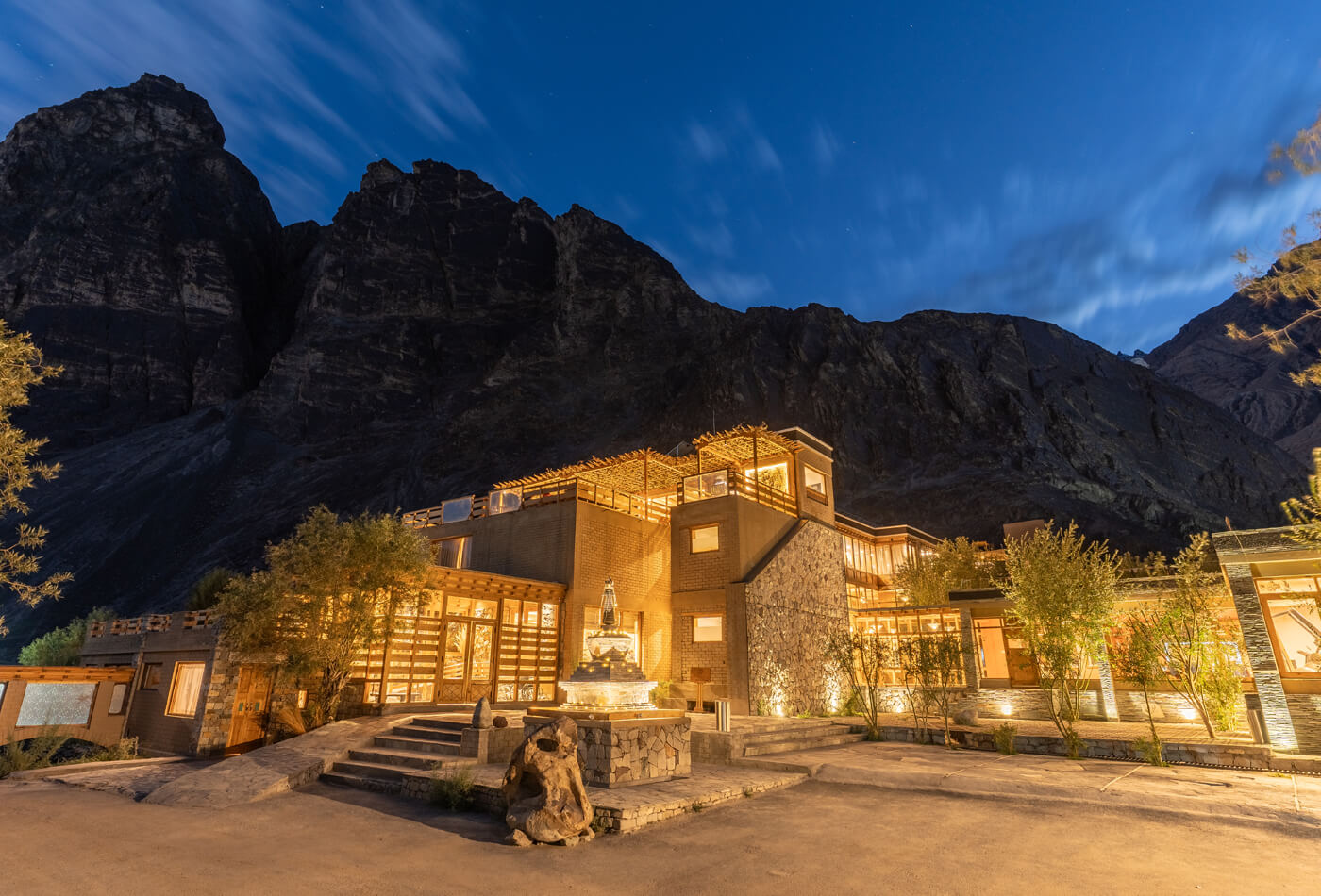
“The question was never what to bring to Nubra Valley. The question was how to hear what Nubra Valley was already saying.” And that is what architects did. Here, stone speaks to stone. And if we quiet our presumptions long enough, wemight hear the dialogue that was always happening.