We Don’t End at Our Edges – By Namrata Devanjee
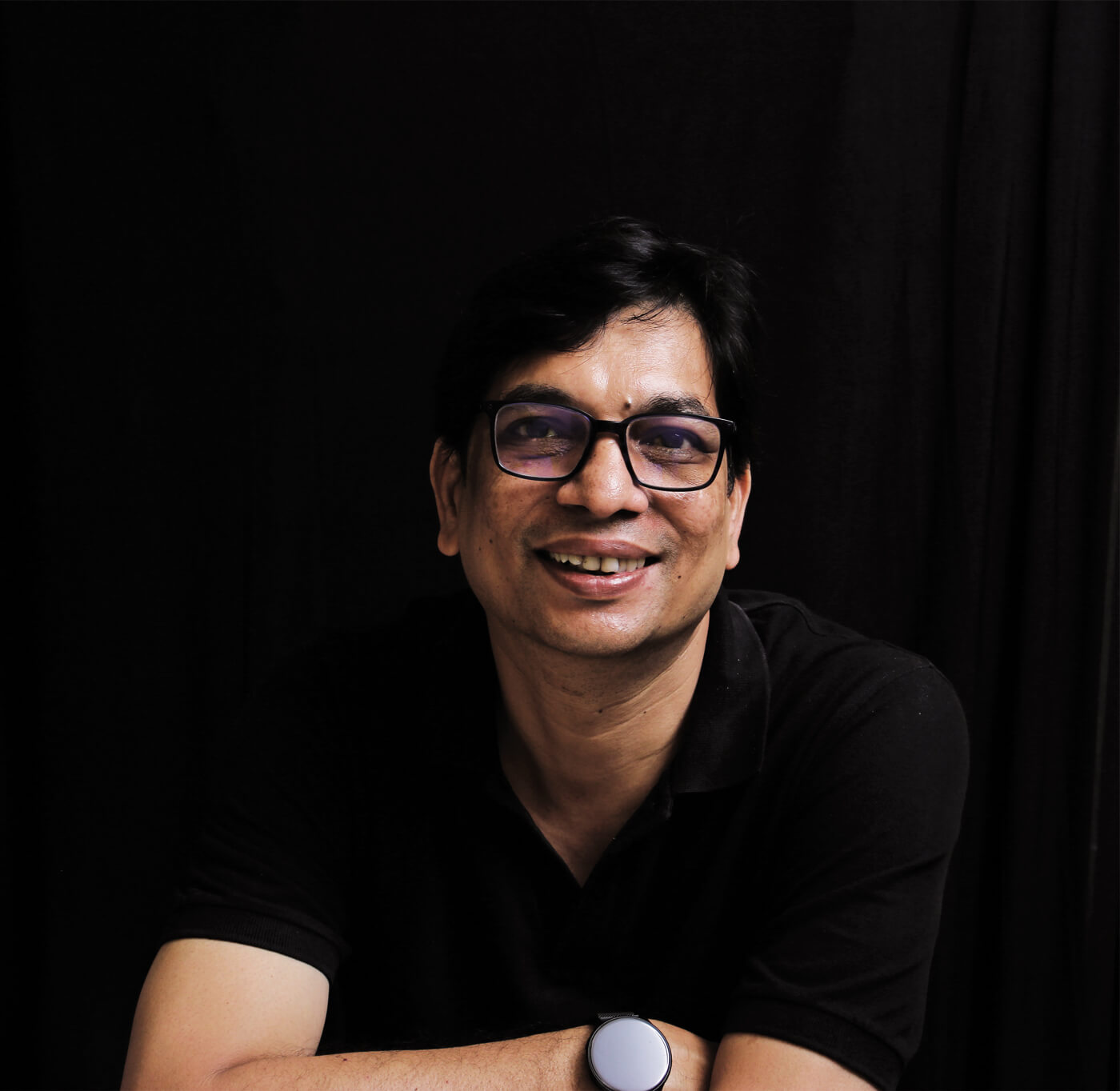 Artist and Writer Ravikumar Kashi pushes paper beyond utility, into a space where script becomes sculpture and language becomes shadow.
“I don’t work on paper but with it,” says artist Ravi Kashi while reflecting on his recent exhibition ‘We Don’t End at our Edges’ at the Museum of Art and Photography in Bengaluru.
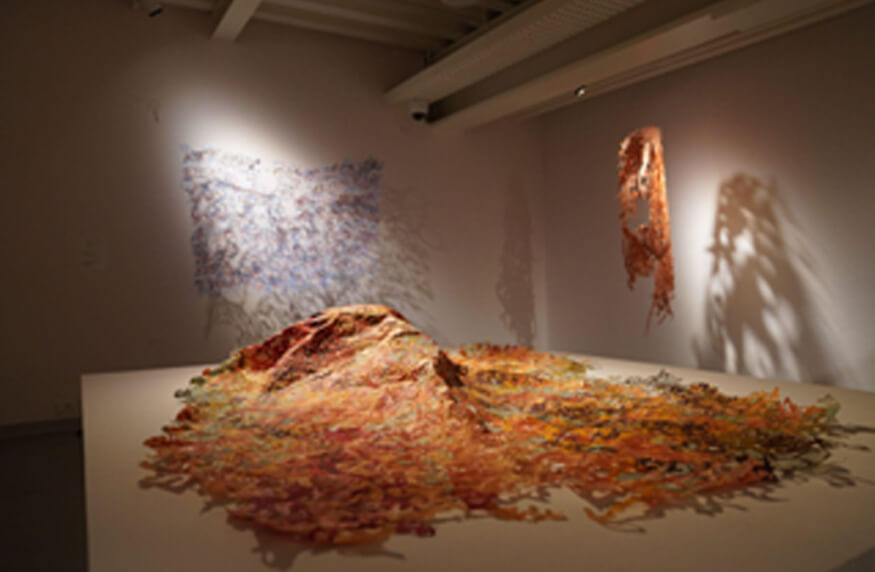
A resident of the city, Kashi’s work is concerned with meaning-making. Paper, being an integral part of his art, particularly the handmade variety from various fibres such as cotton, banana and Daphne for years, changed how I looked at different materials.
But why paper? It was a visit to Visvesvaraya Industrial & Technological Museum, where Kashi witnessed a demonstration of handmade papermaking, where raw fibre was alchemically transformed before his eyes.
That early spectacle of process and material seeded a lifelong engagement, later crystallising into a practice in which paper itself became both medium and metaphor.
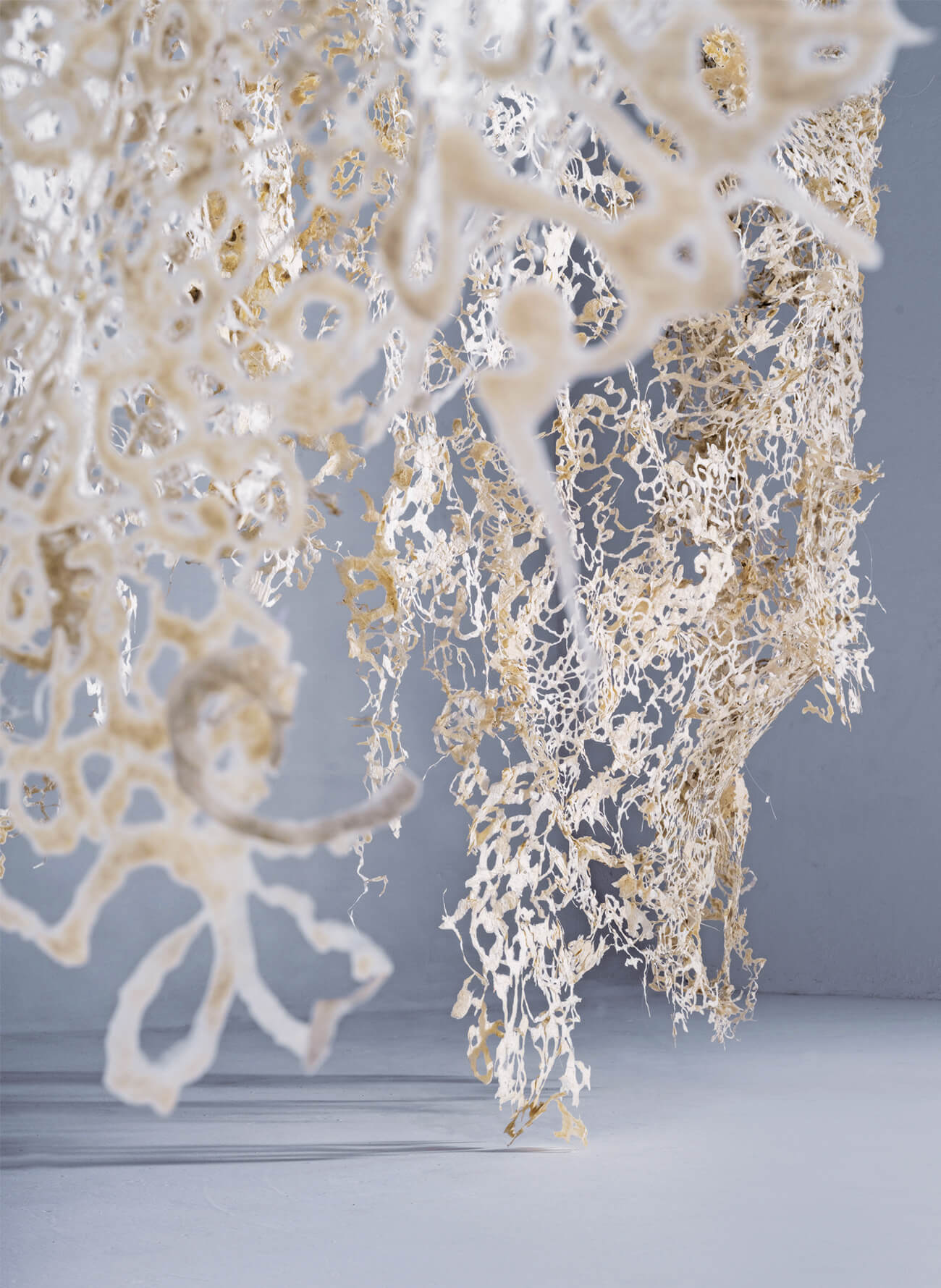
He reimagines paper not as a passive substrate but as an active agent of meaning, fragility and transformation. In his art, it is not only paper that gets reshaped into a creative context, but also the Kannada language that gets reimagined.
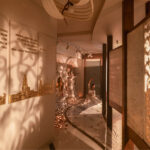
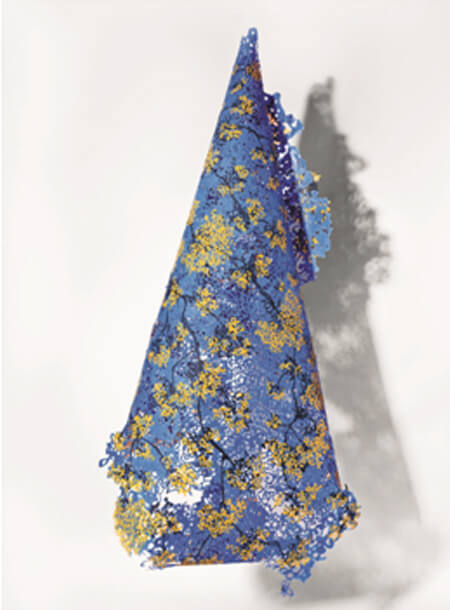
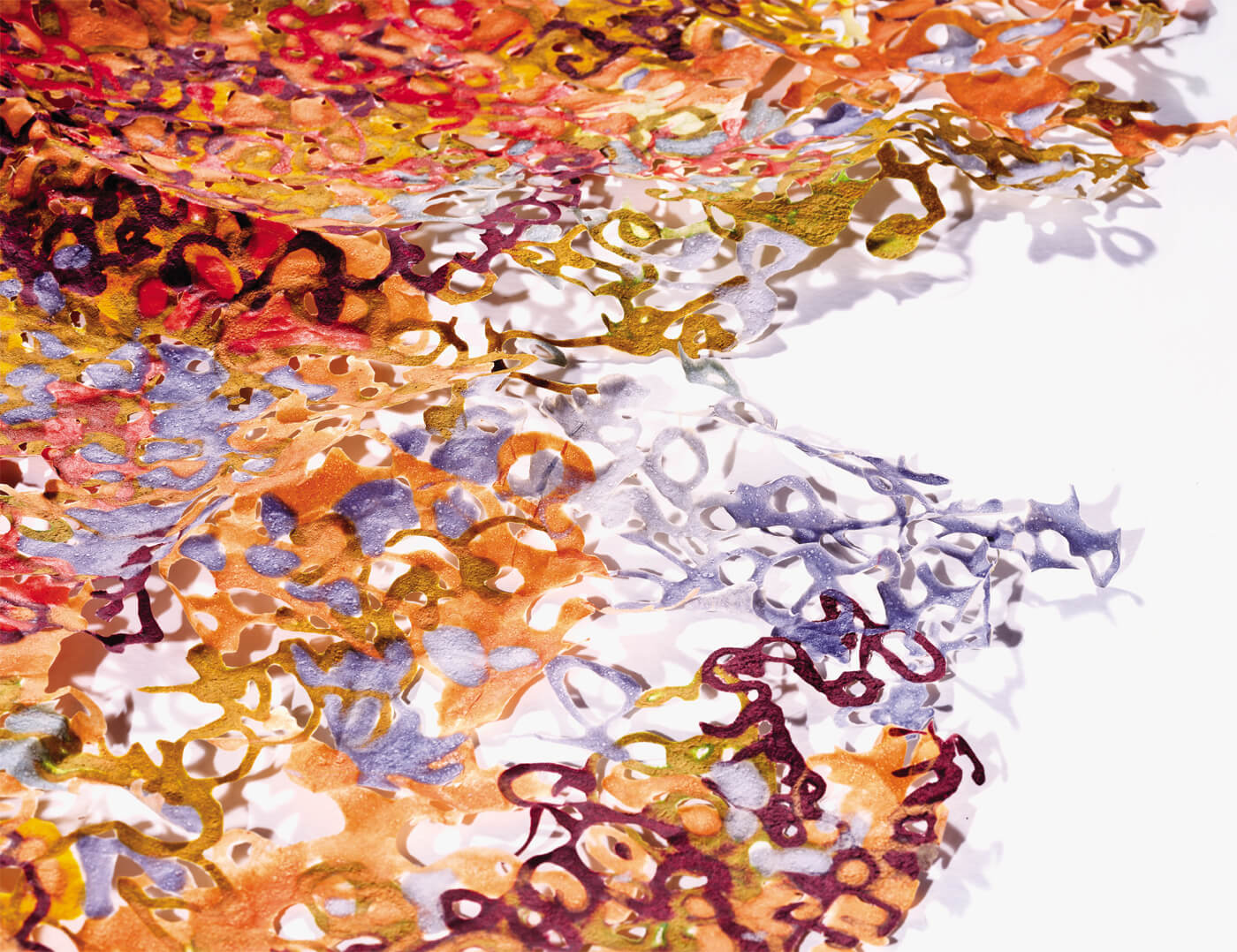
With paper pulp as his medium of inscription, Kashi fashions the Kannada script into fragile architectures, lattices that hover in a liminal zone between text and object, sign and matter. Here, language is neither fixed nor legible in a conventional sense; it collapses and reconstitutes.
Alongside his visual practice, Kashi is an active writer and cultural commentator. His Kannada-language book on art, Kannele, was honoured with the Karnataka Sahitya Akademi Award in 2015.
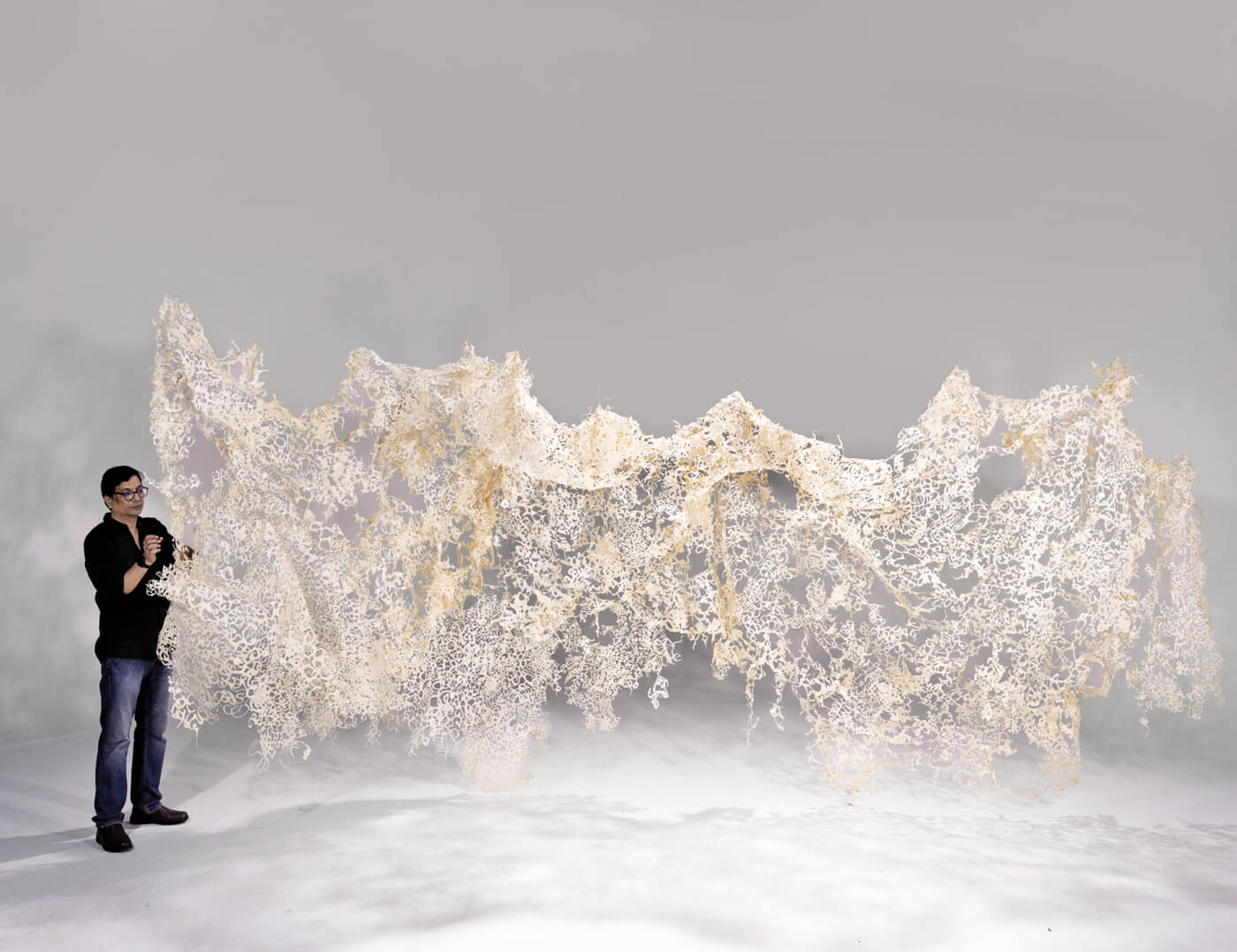
Through his manipulation of script, Kashi insists on the vitality of linguistic memory, yet equally gestures toward its vulnerability, its continual vanishing. What emerges is a philosophical proposition: that self and world, text and matter, remembrance and disappearance are inseparable. In Kashi’s hands, the language of paper comes alive in poised precarity.